Treat outfitting as a journey
The strategy connected discovery, product detail, and purchase instead of locating outfitting in one component.
lululemon · 2023
I created an end-to-end product strategy that connected inspiration, product discovery, and multi-item purchase behavior across the guest journey.
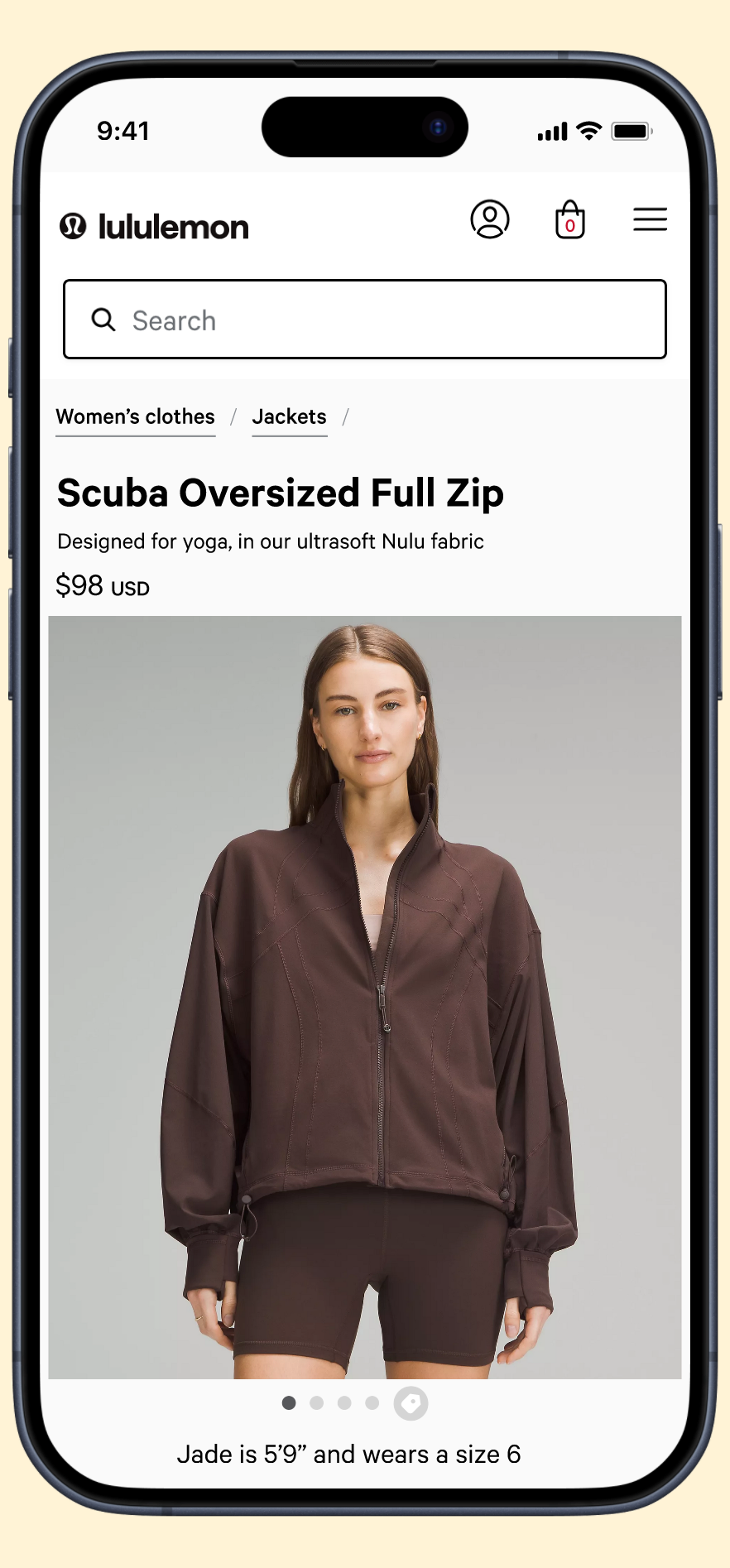
Project brief
01 / Challenge
Single-product journeys made it difficult for guests to build complete looks and made it easy for teams to create disconnected outfitting features. The organization needed a shared view of the behavior before investing in individual touchpoints.
02 / Evidence
Guests needed versatile product suggestions that could work with items they already owned
Guests sought styling education for activities, events, and occasions
Disconnected single-item journeys did not provide continuity from inspiration to purchase
03 / Approach
I framed the opportunity across discovery, product detail, and purchase, then translated research and merchandising goals into experience principles, priority moments, and reusable building blocks. The work connected near-term releases to a longer-term product system.
04 / Key insight
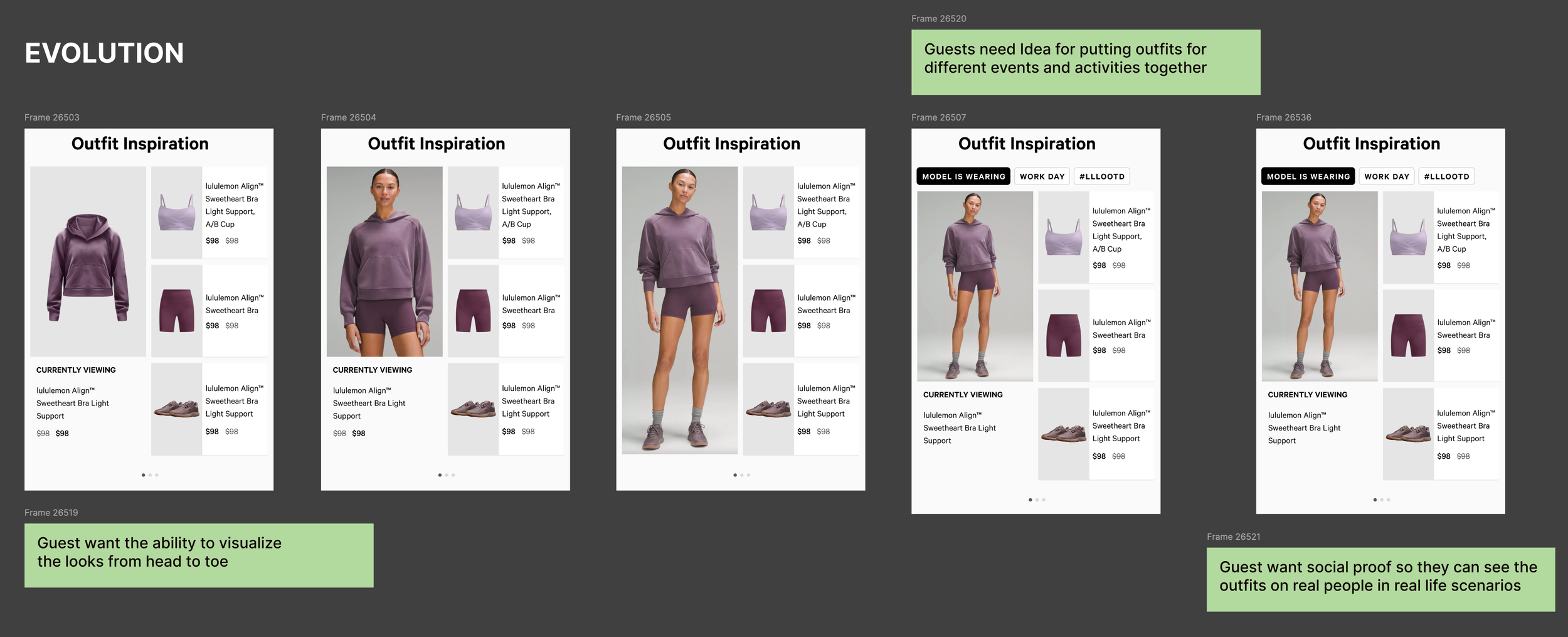
Outfitting is not one component. It is a connected behavior that starts with inspiration and needs continuity all the way through purchase.
The strategy connected discovery, product detail, and purchase instead of locating outfitting in one component.
Reusable imagery, product relationships, and interaction patterns could support multiple experiences.
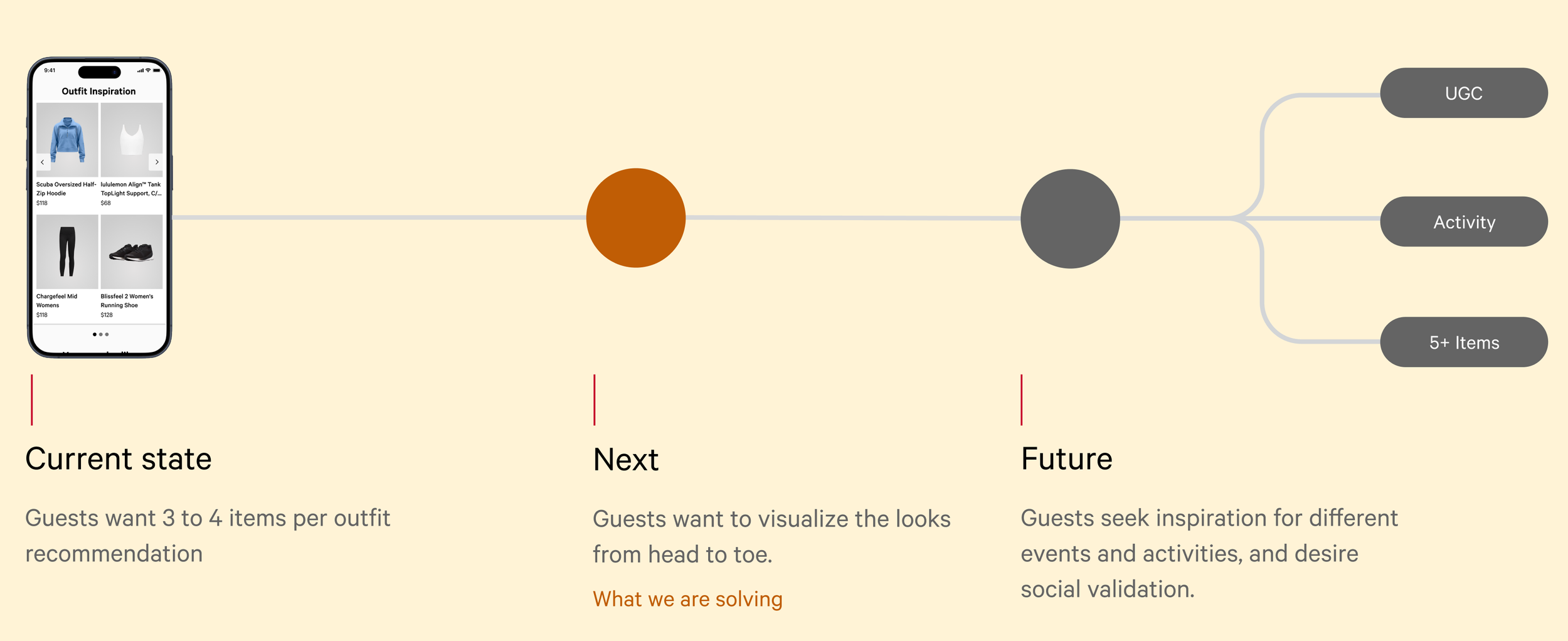
A phased roadmap separated immediate improvements from capabilities that required longer-term investment.
05 / Solution
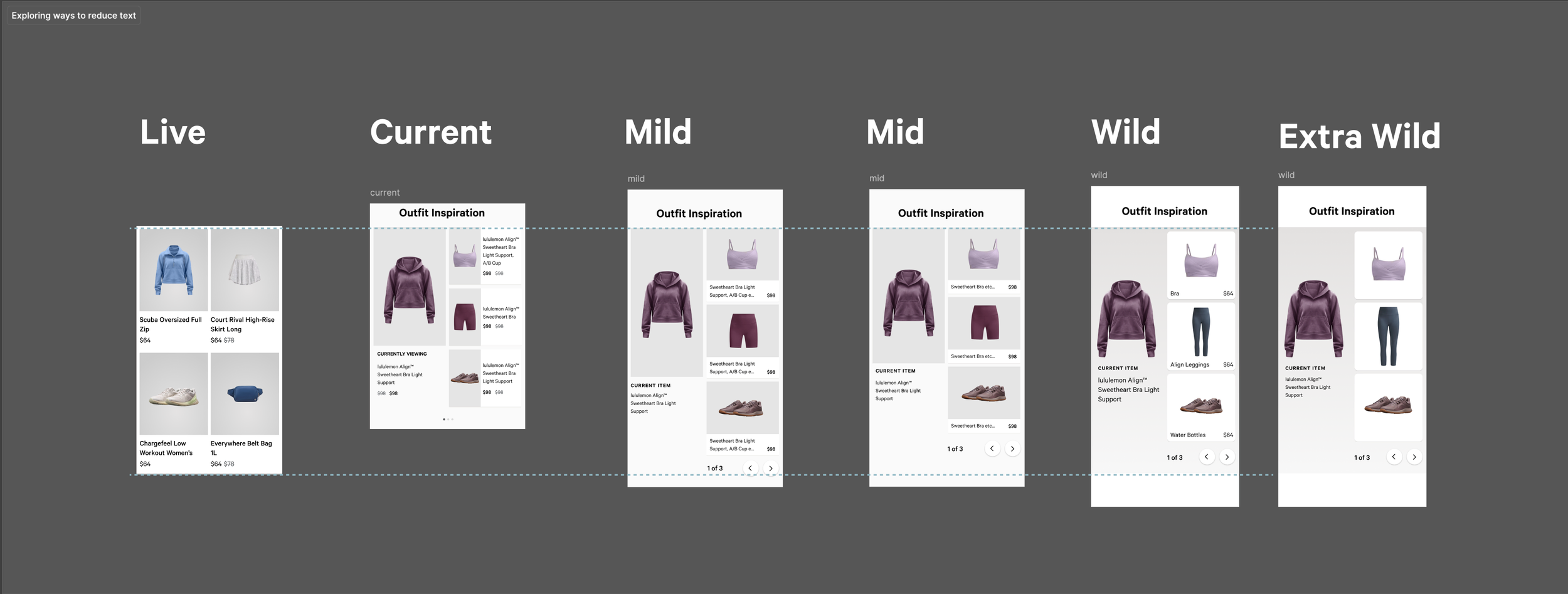
The framework defined where complete looks should appear, what guests need at each stage, and which capabilities should be shared. It gave teams a common language for sequencing work without losing the larger experience.
Constraints
Collaboration
I used journeys, experience principles, component concepts, and a capability roadmap to align product, merchandising, research, and engineering around one outfitting model. The work created shared language for later delivery teams.
06 / Outcome
A shared vision and reusable experience framework
This was a strategy outcome rather than a standalone launched feature. Its evidence is organizational alignment and the downstream Shop the Look and Outfit Inspiration experiences; their metrics are reported in their own case studies rather than attributed to strategy alone.
07 / Reflection
A useful strategy is specific enough to guide decisions and flexible enough to survive changing roadmaps. Connecting principles to concrete components made the vision actionable.